Specification
Timber fence heights
Height is the specification people are most confident about and most often wrong about, because the number you have in your head is rarely the number that matters on site.
5 min read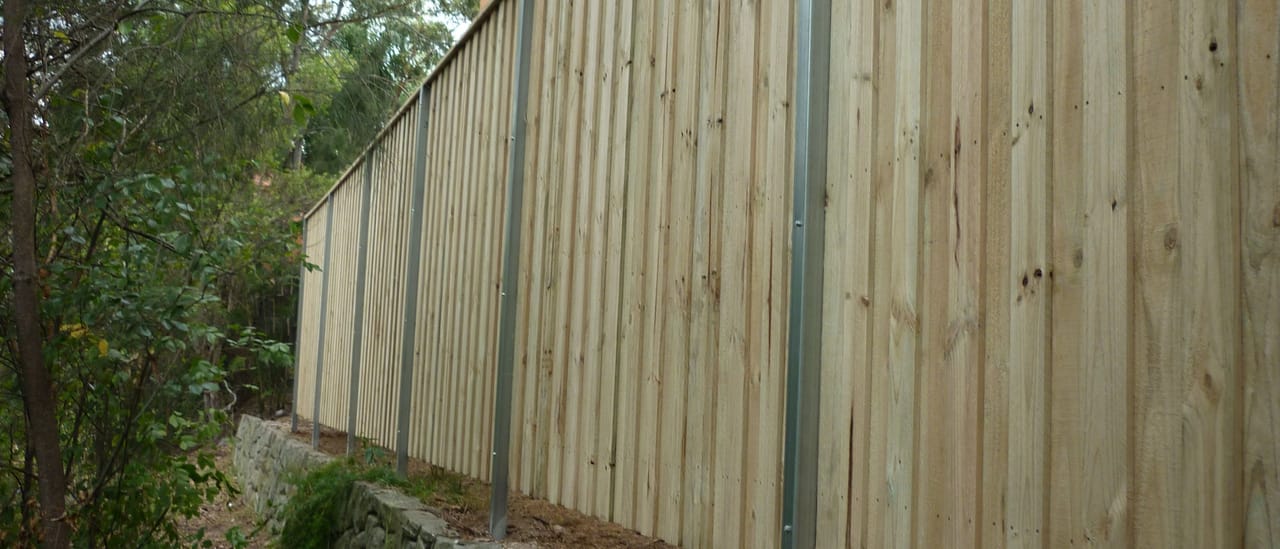
There is no single best timber fence. There is a best fence for your boundary, and the honest way to get to it is to work through what the fence actually has to do.
Most people arrive with one of four priorities: privacy, appearance, cost, or matching something that is already there. Once you know which one is driving the decision, the choice gets a lot simpler.
Before comparing styles, answer these. The answers point you at a style far more reliably than looking at photos does.
Every timber fence choice comes down to two separate decisions, and people often conflate them.
The first is the timber: treated pine or hardwood. That is a decision about appearance, weight and cost.
The second is the paling layout: single paling, lapped, or lapped with a capping rail. That is a decision about privacy and how the fence is finished at the top.
Once you separate them, the four systems make more sense. Three of them are treated pine with different paling layouts. The fourth swaps the timber.
Go lapped. Both lapped only and lap & cap overlap the palings so there is no straight gap to see through, and unlike a single paling fence, seasonal timber movement does not open up a sight line.
Then decide whether the top of the fence is visible. If it is, add the capping rail. If it is not, lapped only saves the material.
Lap & cap is the most finished of the treated pine options, because the capping rail gives the run a single clean line along the top. That line is what makes a fence look considered from a distance.
Hardwood is the other answer, but for a different reason. Hardwood is about the character of the timber itself: the colour, the grain and the variation between palings. It is worth choosing when you want the fence to read as timber rather than as a fence.
Single paling in treated pine uses the least material for a given length, because the palings sit edge to edge rather than overlapping and there is no capping rail.
Lapped only sits in the middle: overlapped palings, no capping.
Lap & cap uses the most treated pine, because of both the overlap and the capping rail.
Hardwood is a more expensive material than treated pine regardless of layout.
We do not publish prices, because the fence style is only one input. Length, height, gates, removing the old fence, access and ground conditions all move the number, which is exactly what the free site measure is for.
On sloping ground the fence has to step or rake, and the top line becomes the most visible thing about it. A stepped fence with a plain paling top can look uneven, while a capping rail gives each step a deliberate line.
That is why lap & cap tends to be the better answer on sloping Sydney blocks, and why the setting out matters more there than on flat ground.
A summary of how the four systems differ.
| System | Timber | Privacy | Top finish |
|---|---|---|---|
| Single Paling | Treated pine | Blocks view; joins can move | Paling tops |
| Lapped Only | Treated pine | No sight line through face | Paling tops |
| Lap & Cap | Treated pine | No sight line through face | Capping rail |
| Hardwood Single Paling | Australian hardwood | Blocks view; joins can move | Paling tops |
Do not guess. The site measure is free, and standing at the boundary looking at the actual ground, the actual neighbour and the actual access is worth more than any amount of reading.
The quote form has an "I am not sure, I would like advice" option on the fence style step for exactly this reason. Choose it and describe what you are trying to achieve instead.
A lapped fence, either lapped only or lap & cap. Overlapping the palings removes the straight sight line through the face, and it does not open up as the timber moves with the weather.
Single paling in treated pine uses the least material for a given length. Actual cost also depends on length, height, gates, removing the old fence, access and ground conditions.
It is different rather than better. Hardwood is denser, heavier, naturally durable and has more character in the grain. Treated pine is lighter, easier to work and less expensive. Which suits depends on the property and the look you want.
Only if you will see the top of the fence. Capping gives a run a single clean top line and covers the paling ends, which matters most on visible frontages, tall fences, and fences built above retaining walls.
Height is the specification people are most confident about and most often wrong about, because the number you have in your head is rarely the number that matters on site.
5 min readWe do not publish per-metre prices, and any timber fencing website that does is quoting a fence it has not seen.
7 min readMost timber fencing work in Sydney is replacement, not new. Which means the first real question is not what fence you want, it is whether you actually need a new one.
5 min read
Once you know what you want, Jye Fulton will measure the boundary and quote it. There is no charge for the visit.
NSW Fencing Licence 269038C · ABN 76 612 245 594